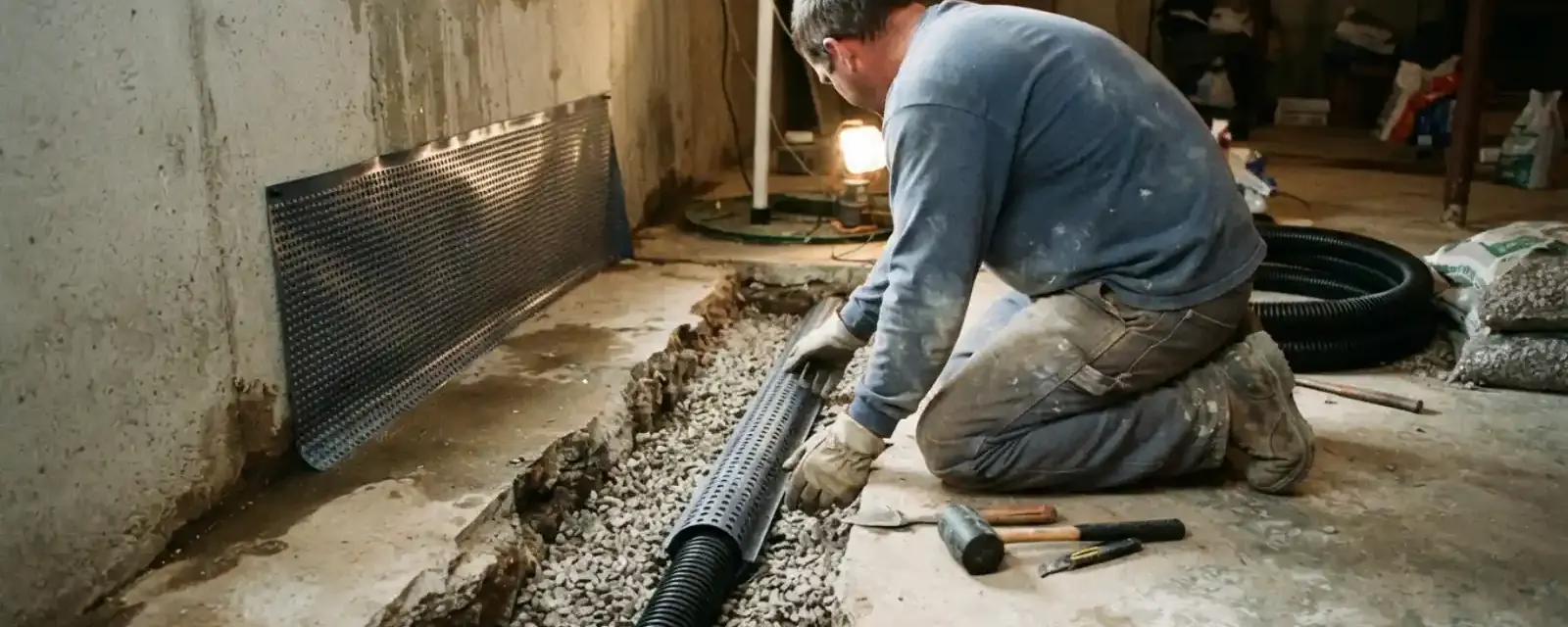
Basement waterproofing in Morristown, NJ starts with a simple question. Where is the water coming from, and when? A basement that gets damp in every rain has a different problem from one that floods once in a decade, and the fix is different too. Licensed plumbers inspect the walls, floor, drains and sump pit, explain what we see and give a clear price before work starts.
Waterproofing is a planned job, not an emergency repair. If water is rising now, move belongings up, stay out of standing water near electrical panels and call us for pumping and flood response. This page covers the longer-term fix once the water is under control.
What the 2021 and 2017 storms showed
Remnants of Hurricane Ida passed through on September 1 and 2, 2021, and the Morristown area logged 5.54 to 6.49 inches of rain in 24 hours, according to NJDEP. Martin Luther King Avenue, Flagler Street and Bishop Nazery Way closed for flooding. A basement that stayed dry that night is a good sign, and one that did not is a reason to look at drainage.
The Whippany River gauge in Morristown, behind the shopping center on Cedar Knolls Avenue, read 5.11 feet at 8:15 a.m. on October 30, 2017, up from 1.9 feet the day before, with minor flooding starting at 6 feet. If you live near the river, watching the gauge during a storm gives early notice, and it helps to know before the rain whether your sump has backup power.
Find the water source first
Water enters a basement through cracks in walls, the joint where wall meets floor, window wells, a failing drain or rising groundwater. It may also come from a leaking pipe, so we rule that out first.
We watch where and when the dampness appears. Dampness on one wall after a rain points to surface drainage, water along the floor edge points to groundwater pressure, and wet spots without rain can mean plumbing. A leak detection visit settles the plumbing question quickly.
A sump pump is often the fastest first line of defense.
Interior drainage systems
An interior system collects water at the base of the wall in a channel under or beside the floor and sends it to a sump pit, where a pump discharges it outside. It does not stop water from entering the foundation, it controls where the water goes.
The upside is that the work happens inside, so there is no digging up landscaping, driveways or patios. The downside is that the pump becomes an essential part of the system, which means maintenance and a backup plan for power outages.
Exterior waterproofing and grading
Exterior work digs down along the foundation, seals the wall and installs drains at the footing. It addresses water before it reaches the foundation, which makes it the more thorough approach when a wall is cracking or leaking steadily.
The trade-offs are cost, disruption and access. Decks, steps, gas lines and mature plants can all be in the way, and some houses sit too close to a neighbor or driveway to excavate. Simpler fixes come first, like extending downspouts, cleaning gutters and regrading soil so it slopes away from the house.
Which approach fits your house
Many homes need a mix. Surface water fixes are the cheapest place to start, interior drainage helps with groundwater pressure, and exterior sealing is best for serious wall leaks. We give you an honest recommendation, even when that means the smaller job.
Sump pumps as part of the plan
The sump pump is the part that actually moves water out of the basement, so its condition decides how well the rest works. We check the pit, float, discharge line, check valve and battery backup if you have one.
If your pump is old, noisy or runs constantly, replacing it before storm season is cheaper than a flood. Our sump pump installation and repair service can be paired with any waterproofing plan.
Sewer backups and drain connections
Not all basement water is groundwater. A floor drain that bubbles during a storm may be a sewer or storm drain issue, not a wall leak, and the cure is different.
A camera inspection through sewer inspection can show whether the line is blocked or damaged. If your house is on the Morris Township sewer system, the WPCU can tell you about issues with the public main. Ask your town if you are unsure which system serves you.
Maintenance that keeps basements dry
A few habits reduce the chance of water getting in.
- Clean gutters and extend downspouts several feet away from the foundation.
- Test the sump pump by pouring water into the pit before big storms.
- Keep window wells clear of leaves and soil.
- Watch for efflorescence, white mineral residue that signals past moisture.
What affects the price
You get a clear price before work starts. Waterproofing is quoted after inspection because every foundation is different.
Standard homeowner policies often exclude groundwater or flood seepage unless you have added coverage, so ask your insurer what applies before filing. Want your real number? Call (908) 357-1542 and the price is clear before work starts.
Frequently asked questions
Neither is always better. Interior drainage is less disruptive and handles groundwater, while exterior sealing stops water at the wall but costs more and needs excavation.
It reduces water entry significantly, but no basement is perfectly dry in every condition. A dehumidifier and good grading help with the rest.
Many basements with interior drainage do. A pump also helps in low spots, so see our sump pump page for details.
Heavy rain raises groundwater and overloads drains. After a storm like Ida, many homeowners learn which gutters, grading and pits need work.
Stay out of standing water near electrical equipment, turn off power at a dry panel if safe and call us. Waterproofing comes later.
Yes, we serve Morristown and nearby towns, including Morris Plains.