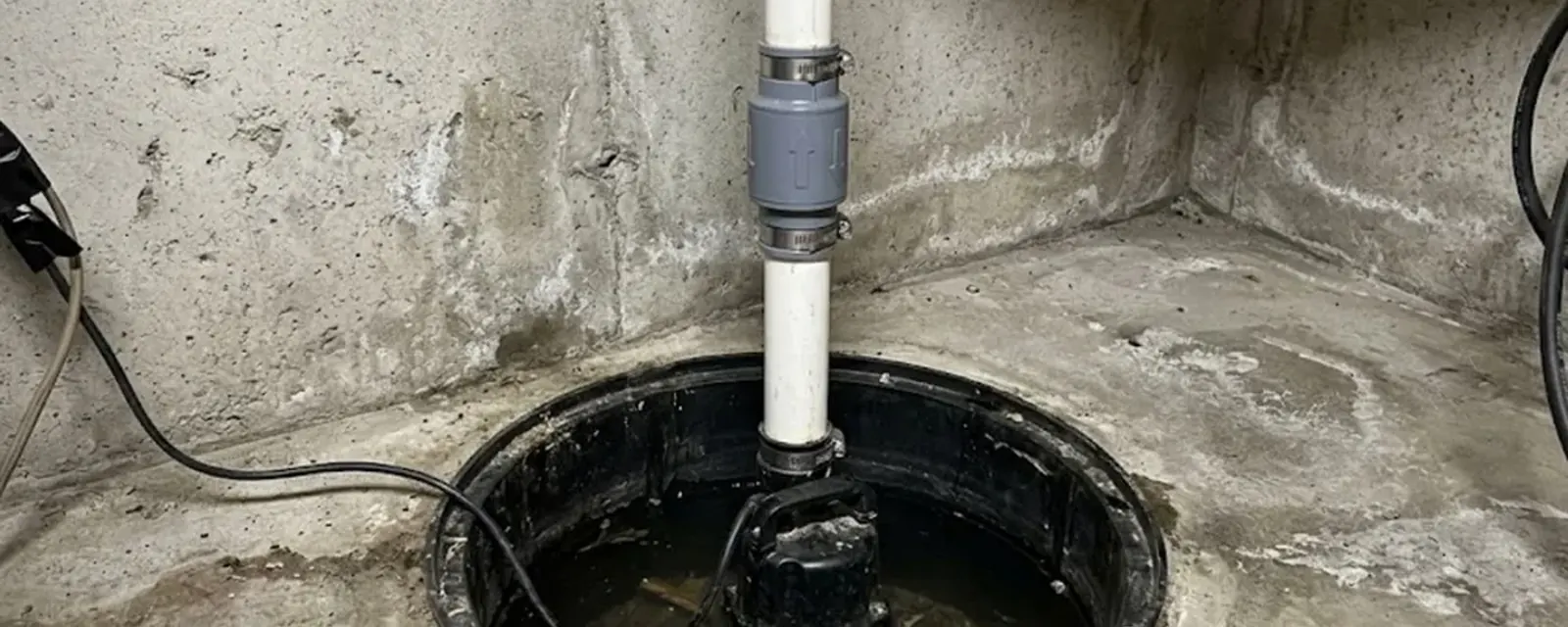
If the pit in your basement is full, the pump is silent and water is creeping across the floor, you need sump pump service in Morristown, NJ right now. Our licensed plumbers dispatch 24/7 during storms, including at night. Until we arrive, keep out of standing water if the pump, outlet or panel is wet, and cut power at the breaker if you can reach it dry. Move boxes and stored items onto shelves or pallets.
A sump pump is idle for months and then asked to work hard on the worst day of the year. That is why most failures show up in a storm. We repair stuck floats, clogged intakes and failed check valves, replace pumps that have quit, and install battery backups so a power cut does not leave you with a flooded basement.
Sump pump not running with water in the pit
When the pit fills and nothing happens, the cause is usually one of three things. The float is stuck against the side of the pit, the pump has lost power, or the motor has burned out. A tripped GFCI outlet is the easiest to miss, and it is worth pressing the reset button before assuming the worst.
If the pump hums but does not move water, the impeller may be jammed with grit or the check valve may be stuck closed. We pull the unit, clean the intake, test it in a bucket, and put it back or replace it.
- Check that the pump is plugged into a working outlet and reset the GFCI
- Lift the float by hand to see whether the pump starts
- Do not touch the pump if any water reaches the outlet or panel
- Note how fast the pit refills, since it helps us size the fix
What the Ida rainfall tells us about sizing
On September 1 to 2, 2021, remnants of Hurricane Ida put between 5.54 and 6.49 inches of rain on the Morristown area in 24 hours, based on state figures reported by Patch. Martin Luther King Avenue, Flagler Street and Bishop Nazery Way were closed for flooding. That much rain in one day saturates the soil around foundations and pushes groundwater toward any low point, including your sump pit.
The practical lesson is that a pump rated for average wet weather can fall behind in an extreme storm. If your pit refills in minutes during hard rain, a stronger primary pump, a larger pit or a second pump may be justified. Tell us what you saw in past storms and we will work from that.
Stay out of standing water near outlets. Call once the pit is rising.
Why the Whippany River matters to a basement
The National Weather Service gauge on the Whippany River in Morristown, behind the shopping center on Cedar Knolls Avenue, read 5.11 feet at 8:15 a.m. during the October 30, 2017 nor'easter, up from 1.9 feet the day before. Flood action stage had been reached, and minor flooding starts at 6 feet.
A river rising by more than three feet overnight raises the water table nearby, and a sump pit near the river corridor can fill long before a street floods. If your home is close to the Whippany or one of its tributaries, treat a rising gauge as an early warning and test your pump before the rain arrives.
Battery backup and power failures
The storms that overload sump pumps often knock out power too. A pump without electricity is useless, and the basement fills at the very moment the pit is working hardest. A battery backup with its own float and charger takes over when the main pump stops.
Backups have limits. A battery runs for a limited time, depends on charge and condition, and is not a substitute for a pump that works. We size the unit for your pit, test it under load, and explain how often the battery should be checked.
Ejector pumps and basement bathrooms
Sump pumps handle groundwater. Ejector pumps lift wastewater from a basement bathroom, laundry or kitchenette up to the main drain. They are sealed, they smell if the cover is loose, and they need different parts.
A failed ejector means toilets, tubs and laundry stop draining. Do not keep using those fixtures. We replace the pump and the check valve, and where the basin has failed, the basin as well. If several drains upstairs also gurgle, the problem may be the main line and not the pump, which belongs with sewer line repair.
Discharge lines and where the water goes
Pumping water out helps only if it goes somewhere sensible. A discharge pipe that ends too close to the foundation sends the water straight back to the pit in a loop. A frozen or kinked line can stop a good pump from moving anything at all. If a frozen line split, burst pipe repair covers the fix.
Check that the outlet is clear, points away from the house and has a screen or flap if needed. For where discharge may legally go, ask the town construction office, because local rules vary. We can reroute and extend the line to a better spot.
Pump maintenance before the wet season
Once or twice a year, pour a bucket of water into the pit and watch the pump start, run and shut off. Listen for grinding. Clean the pit of silt and gravel. Make sure the float moves freely, and check that the check valve clicks shut.
If you want the pump looked at before storm season, we offer same-day appointments when available. When the pit keeps filling even with a new pump, the cause is often drainage around the house, and basement waterproofing addresses that. A pump that cycles when it has not rained recently may also point to a plumbing leak, which is a job for leak detection.
What affects the price
A float adjustment and a full pump replacement with backup are very different jobs. We assess the pit first and give a clear price before work starts.
Some homeowners policies exclude groundwater and sump backup unless a separate endorsement is added, so ask your insurer what applies to you before the next storm. Want your real number? Call (908) 357-1542 and the price is clear before work starts.
Frequently asked questions
Yes. Licensed plumbers are dispatched 24/7 when a pump fails or water is entering a basement, and same-day appointments are offered when available for planned replacements.
Pour water into the pit until the float lifts. The pump should start, empty the pit and shut off.
If your basement is finished or holds stored belongings, yes. It covers the power failures that often come with storms.
The float may be stuck, the check valve may be leaking back, or the water table may be high. We can tell which on site.
No. It keeps groundwater from reaching the floor but cannot remove water that has already spread across it.
We serve Morristown and nearby towns, including Florham Park, where the Passaic River forms the eastern boundary.