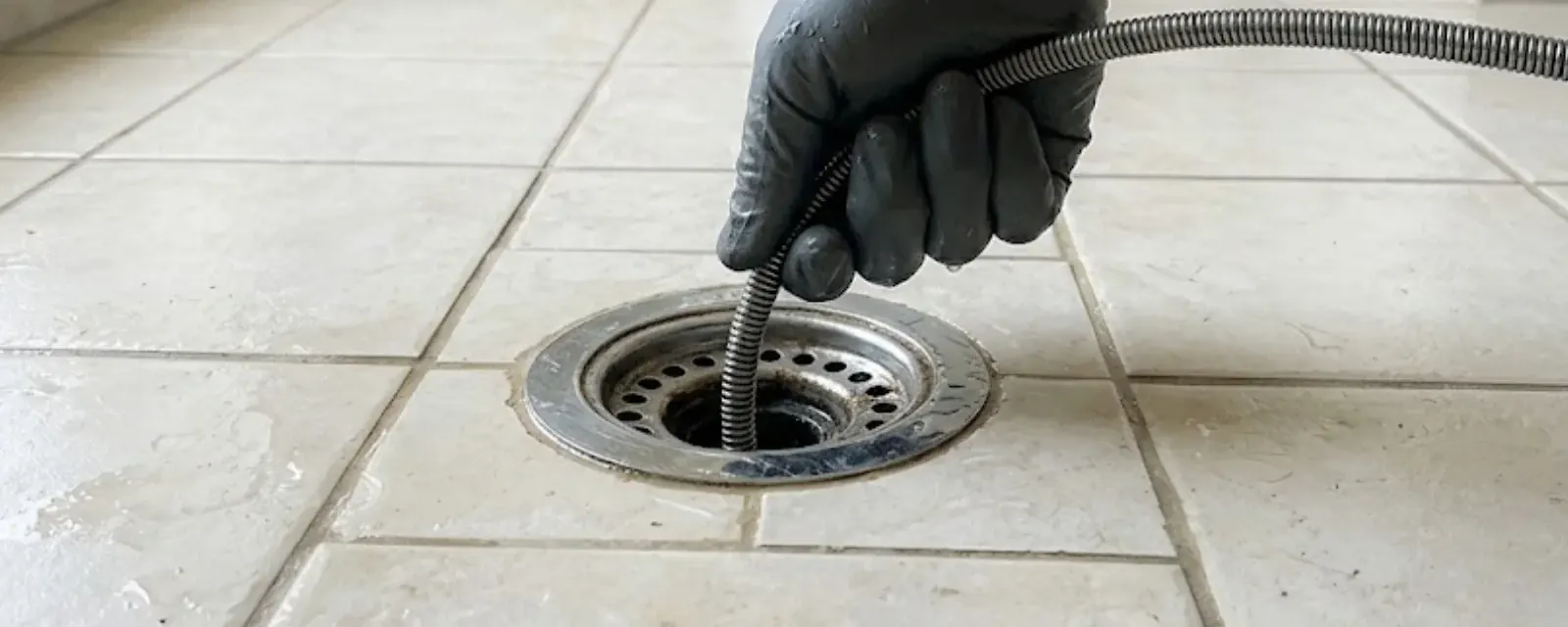
Baking soda drain cleaning works for light odors and a thin film of soap or grease, and it does little else. Pour half a cup of baking soda down the drain, follow with a cup of white vinegar, wait fifteen minutes, then flush with hot tap water. The fizzing loosens surface residue, but it cannot dissolve hair mats, wipes, grit or a solid plug.
If water stands in the sink after one round, or more than one fixture is slow, stop. Repeating the recipe will not clear a deeper blockage. A licensed plumber can open the line with proper equipment, often on a same-day appointment when available.
By the Morristown Express Plumbing team. Published October 30, 2026. Updated October 30, 2026.
What the fizz is really doing
Baking soda is a mild base and vinegar is a mild acid. Together they produce carbon dioxide gas and water with a little sodium acetate. The bubbling looks dramatic, but the actual cleaning power is small.
The foam can lift loose residue from the pipe wall and neutralize some odor. It does not generate enough force to move a clog, and the liquid is mostly water by the time the reaction finishes.
Step-by-step method
Use this on a slow sink, tub or shower, not on a drain that is completely blocked.
- Remove standing water with a cup so the baking soda reaches the drain.
- Pour in half a cup of baking soda and push it down with a spoon.
- Add one cup of white vinegar and cover the drain with a plug or wet cloth.
- Wait fifteen to thirty minutes while the foam works.
- Flush with a kettle of hot tap water, not a rolling boil, if you have PVC or old fixtures.
- Run the tap and check the flow. Repeat once if it improved.
Home methods compared
Each one has a narrow use.
| Method | Works on | Skip it when |
|---|---|---|
| Baking soda and vinegar | Light film, odor | Standing water, hair mats |
| Hot tap water flush | Fresh grease | Pipes are fully blocked |
| Plunger | Local sink or tub plug | Multiple fixtures slow |
| Hand drain tool | Hair in shower or sink | Blockage is out of reach |
| P-trap cleaning | Debris in trap | Clog is in the wall or main |
Where it helps
A bathroom sink with a faint sour smell, a kitchen drain that gurgles slightly, or a tub that is a bit slower than last month are all reasonable tries. Light buildup responds, and the method is safe on all common pipe materials when done once or twice.
It also makes a cheap monthly habit. Some people use it after cooking greasy meals to keep film from building up, though a hot water flush and a strainer do just as much.
What to do if the drain is already full
If the sink is full of water, do not add anything to it. Bail out the water, check the trap under the sink, and use a plunger. If water rises in a second fixture while you work, the clog is in a shared line and you should stop.
Keep the area dry, avoid running the dishwasher or washer, and call for help. Continued use pushes wastewater toward the lowest drain, usually in a basement.
Where it fails
Hair clogs, food stuck in a disposal line, toys, wipes, mineral scale and tree roots are outside what baking soda can handle. A clog deep in the branch line or main will never be reached by a cup of powder.
The method also fails when the blockage is a pipe defect. A sagging section, a cracked joint or a root-infested sewer line produces repeat clogs no matter how many boxes of soda you use.
Better tools to try first
For a sink or tub, a plunger with a good seal is usually stronger than the kitchen mix. A hand drain tool with barbs pulls hair out of a shower drain in seconds. Remove and clean the P-trap under a sink if you can do so with a bucket underneath.
Avoid caustic liquid openers. They can sit in a stopped drain, damage old pipes and splash dangerously when a plumber arrives to work on the same line. Mixing products makes things worse.
Signs you need a plumber
Call when water backs up into another fixture, a floor drain bubbles, or a sewage odor lingers. These signs point to the main drain or sewer line, where home remedies do not reach. Delay lets a partial clog become a full backup.
A professional drain cleaning visit uses a cable or small camera to find and remove the cause. If the problem is a damaged or root-filled line, the plumber can explain the repair options and quote the work in advance.
A simple prevention routine
Prevention beats rescue. Fit a mesh strainer in every shower and kitchen sink, wipe greasy pans with a paper towel before washing, and run hot water for thirty seconds after using the sink for anything oily.
Once a month, pull the stopper in the bathroom sink and clean off the gunk by hand. That small chore removes more buildup than any fizzing mixture, and it takes two minutes with an old toothbrush.
What a plumber does that you cannot
A professional cable reaches many feet into the line and cuts through the blockage instead of poking at it. For heavy buildup along the pipe wall, hydro jetting scours the interior with water at pressure that no household product matches.
A camera also lets the plumber show you what is inside. Instead of guessing, you can see grease, roots or a broken section, and choose the right repair with the cost explained first.
Common myths
Boiling water does not always help, and it can soften PVC joints or crack porcelain. Dish soap and hot water help only with grease. Salt and baking soda combos add nothing beyond what baking soda alone does.
Morristown, NJ: your tap water and your pipes
SMCMUA supplies water to Morristown from blended sources, and its 2024 water quality report lists hardness between 29 and 400 mg/L, which is roughly 1.7 to 23.4 grains per gallon. That is a wide range, so hardness can differ by street and season.
Harder water leaves more scale inside drains and traps, and scale is something baking soda does not remove. Test your own tap or read the report before assuming a clog is soap. We also serve Florham Park, which SMCMUA lists as a customer, and Madison, which has its own borough water utility.
Frequently asked questions
Yes for most sinks and tubs, used occasionally. Do not use it as a daily habit and never seal the mixture in a closed container, since the gas builds pressure.
Usually not. Toilet blockages are typically solid items or a clogged trap, which need a plunger or an auger. Repeated clogs could mean a problem further down the line.
A narrowed or damaged pipe can rebuild blockages fast. A camera inspection shows whether grease, scale or roots are the cause.
No. Mixing chemicals can create heat or fumes and leave hazardous liquid sitting in the pipe, which is dangerous for anyone who later works on it.
Once, then try a plunger or drain tool. If two rounds do nothing, move on rather than wasting product.
It does not change the reaction, but scale in the pipe is not touched by it. Test your tap or check the SMCMUA report to see how hard your water is.