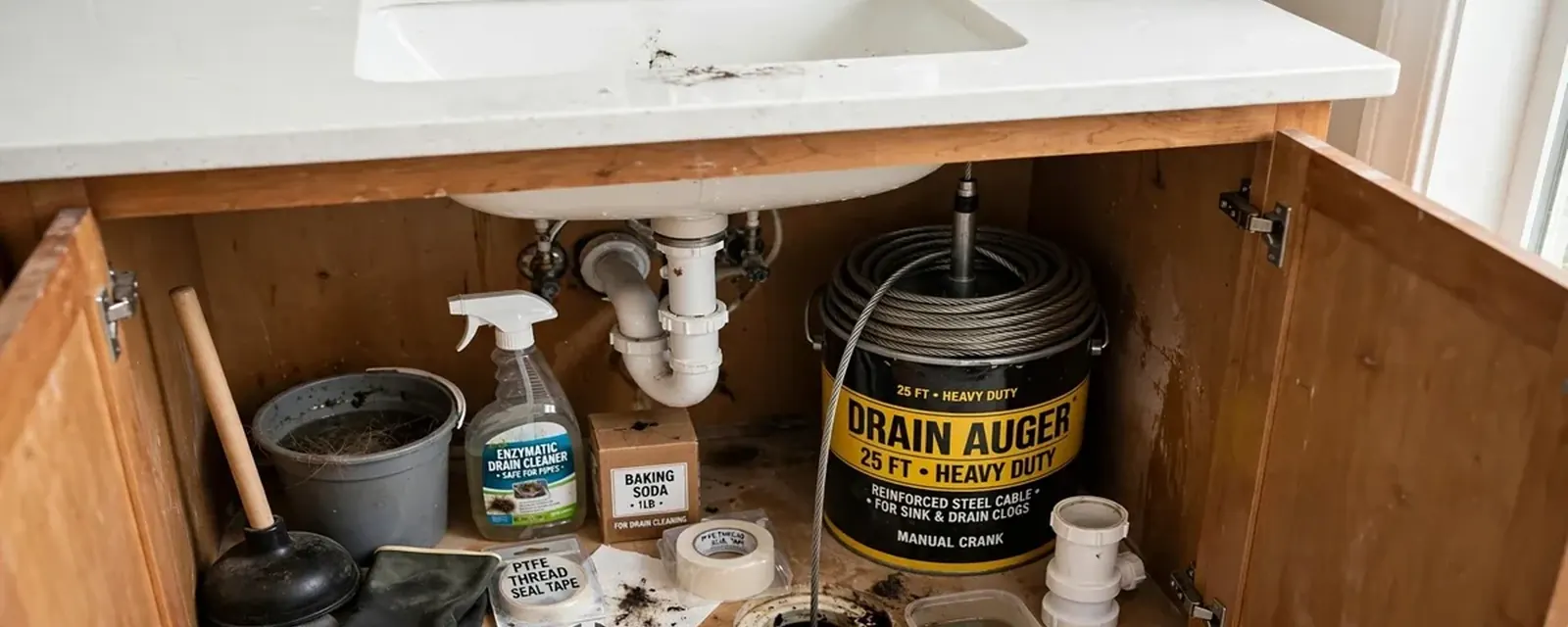
Enzyme drain cleaner works, but only on organic buildup like grease film, soap scum, hair slime and food residue. It does not clear a solid blockage, a collapsed pipe, tree roots or a toy stuck in a trap. Think of it as slow maintenance for a drain that runs a little sluggish, not a rescue for a sink that is already full.
Most bottles want an overnight soak, and results show up over days, not minutes. If your drain is completely stopped, or water is backing up into a tub or floor drain, skip the bottle and call a plumber. A licensed plumber can open the line the same day when appointments are available, which a jug of bacteria cannot do.
By the Morristown Express Plumbing team. Published October 30, 2026. Updated October 30, 2026.
How enzyme cleaners actually work
These products contain bacteria or purified enzymes that digest organic material. Fats, proteins and starches get broken into smaller pieces that rinse away with normal water use. The process is biological, so it needs time, moisture and a drain that is not being flushed with harsh chemicals at the same moment.
That explains both the appeal and the limits. The formula is gentle on old pipes and safe for most plumbing materials, but it cannot touch hair knots, grit, mineral scale, wipes or plastic. If the clog is made of something a bacterium cannot eat, the enzymes simply sit there.
Where enzyme cleaners make sense
The best use is prevention. A kitchen drain that gurgles after dinner, a shower that drains a bit slower each month, or a bathroom sink with a faint sour smell are all good candidates. Regular dosing keeps film from thickening into a plug.
They also help in homes that avoid caustic cleaners because of older cast-iron or galvanized drain lines. Harsh chemicals can sit in a low spot in those pipes and do damage, while enzymes are mild by comparison.
Choosing the right drain fix
Match the method to the cause of the clog.
| Method | Good for | Not good for |
|---|---|---|
| Enzyme cleaner | Grease film, soap scum, odors, prevention | Hair, wipes, roots, full blockages |
| Plunger | Toilet and sink plugs near the fixture | Clogs deep in the line |
| Hand cable or snake | Hair and debris within reach of the cable | Grease coating the full pipe wall |
| Hydro jetting | Heavy grease, scale and silt in a long run | Broken or collapsed pipe |
| Camera inspection | Repeat clogs with no clear cause | Clearing the blockage by itself |
How to use one properly
Follow the label, but these habits make the difference.
- Use it at night, when the drain will sit unused for six to eight hours.
- Flush the line first with hot tap water, not boiling water, so the product reaches the pipe wall.
- Pour the full dose, then run no water until morning.
- Repeat weekly for a month, then monthly for upkeep.
- Never mix it with bleach, acid or another cleaner, which can kill the bacteria and create fumes.
Signs the problem is bigger than a bottle
A single slow drain is often local to that fixture. Several slow drains at once, or a toilet bubbling when the washer drains, points to a main line problem further downstream. Enzymes will not reach that far in any useful dose.
Standing water that does not budge after two treatments, a sewage smell, or water appearing in a basement floor drain all mean the blockage is solid or deep. At that stage, professional drain cleaning with a cable or camera is the honest answer.
Kitchen drains versus bathroom drains
Kitchen lines collect cooking fat, which cools and coats the pipe wall like candle wax. Enzymes handle that kind of residue better than almost any off-the-shelf product, provided you dose regularly and keep pouring hot grease into the trash instead of the sink.
Bathroom drains fight a different enemy. Hair binds with soap and forms a mat that bacteria cannot digest. Enzymes may loosen the sticky film around the hair, but you still need a drain screen and an occasional manual pull to remove the mat itself.
What a realistic month of treatment looks like
In the first week, expect little change in flow but often less odor. By the second or third dose, a drain that was lazy should start moving water faster, because the film narrowing the pipe is thinning out.
If nothing has improved after four weekly doses, stop buying product. The cause is probably not organic, and more bottles only delay the real fix while the clog hardens or grows.
Common mistakes that waste the product
The most common error is running water right after pouring the dose, which rinses the bacteria away before they attach to the pipe wall. Close second is pairing enzymes with a chemical drain opener the same week. Pick one approach and give it time.
Choosing a product that is worth buying
Look for a label that names live bacteria or specific enzymes such as lipase, protease and amylase. Vague claims about natural power tell you nothing. Check the date, because bacterial products lose strength on a shelf, and avoid anything that also lists lye or acid on the ingredients.
Liquid formulas tend to coat vertical pipe better, while powders suit slow dosing through a garbage disposal line. Either way, price matters less than regular use. A cheaper bottle used every week beats a premium one used once.
Keep the bottle away from sun and heat, and replace it when it smells off. A dead culture does nothing, and you will not see the failure until the drain slows again.
Enzymes versus other methods
Each approach has a job, and they are not interchangeable. The table below shows what each one handles well and where it stops.
Morristown, NJ: where your drain water ends up
Many Morristown homes tie into the sewer system run by the Morris Township Water Pollution Control Utility, which serves parts of Morristown along with most of Morris Plains, according to the township's website. Other properties connect to a different municipal line, so check your bill or ask the town which system serves your street.
The practical point is that a clog in your own lateral is your responsibility, while a main line problem may belong to the utility. If several neighbors have backups at once, call the utility before you buy cleaner.
Our crews work from South Street and cover Morris Plains and Morris Township as well, so a line that crosses a town boundary is not a problem for scheduling.
Frequently asked questions
Yes, it is generally gentle on cast iron, galvanized steel, copper and plastic. That is its main advantage over caustic cleaners. It still will not fix a pipe that is rusted through or sagging.
Expect noticeable improvement after one to three overnight treatments on a mildly slow drain. A fully blocked drain will not clear this way, so move to a cable or a plumber instead of waiting.
Use the plunger first to move a loose plug, then dose the drain at night. Do not plunge right after pouring in the product, since it needs to sit undisturbed.
Most are designed to be septic-friendly, but septic setups vary. Morristown is largely on municipal sewer, so ask the town if you are unsure which system your property uses.
It can help. Once the line is open, monthly enzyme dosing may slow new film from building up, though it will not replace hydro jetting if the pipe is heavily coated.
If only your home is affected, call a plumber to check the lateral. If neighbors are also backed up, contact the sewer utility, and a licensed plumber can still help with cleanup and inspection.