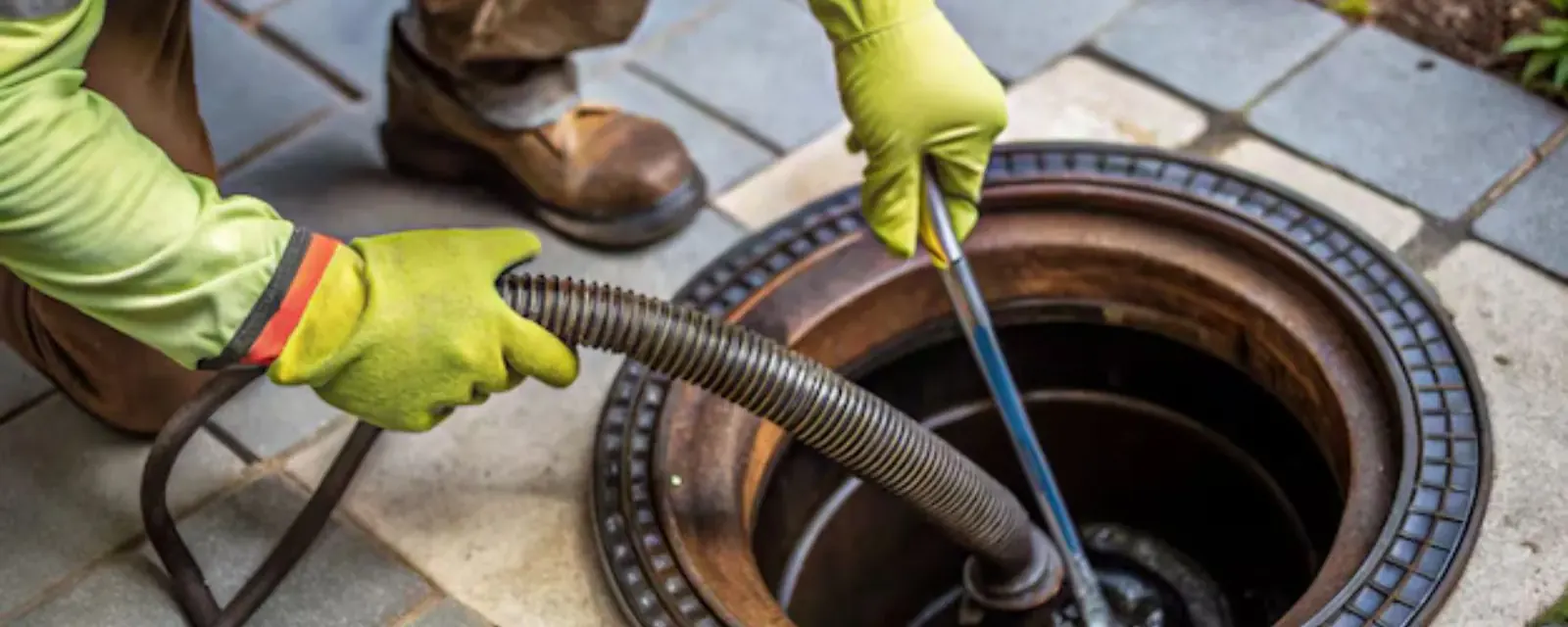
Hydro jetting cleans a sewer line by firing high-pressure water through a nozzle that pulls itself down the pipe. It cuts through grease, sludge, scale and fine roots, then flushes the debris to the main. It is the right tool when a cable only punches a hole through a clog and the line fills back in a few weeks later.
It is not right for every pipe. Cracked, collapsed or badly offset lines can be damaged by the water, which is why a camera look comes first. A licensed plumber will check the line, explain what the picture shows, and tell you plainly whether jetting is safe for your pipe. Either way, you leave knowing what is in the pipe.
By the Morristown Express Plumbing team. Published October 30, 2026. Updated October 30, 2026.
How the jetting process works
A technician feeds a flexible hose with a specially shaped nozzle into a cleanout. Jets pointing backward drive the hose forward, while jets angled to the sides scrub the pipe wall. Water pressure is set for the pipe material and condition, not simply turned to maximum.
The nozzle moves down the line, then is pulled back slowly so debris is carried toward the main sewer. A follow-up camera pass shows whether the wall is clean. Most residential jobs take a few hours once equipment is set up.
Why the camera goes in first
A small camera on a flexible rod shows the pipe interior before any water is used. It reveals the pipe material, any offsets, cracks, sags and the kind of buildup you are dealing with. Without that picture, a technician is guessing about pressure.
You can ask to see the footage. A trustworthy plumber will point to what they see, whether that is grease, roots or damage, and explain how it changes the plan. A planned sewer inspection also makes a good record before buying a house.
Jetting or something else
This quick guide matches the symptom to the likely fix.
| What you see | Likely cause | Best first step |
|---|---|---|
| One slow sink | Local grease or hair | Cable or plunger |
| Whole house slow | Narrowed main line | Camera, then jetting |
| Repeated backup after cabling | Coated pipe wall | Hydro jetting |
| Backup plus sunken yard patch | Possible broken pipe | Camera and repair estimate |
| Fine roots only | Roots at joints | Jetting, then root control |
Jetting compared with cabling
A drain cable spins a blade through the center of a clog. That opens a channel, but grease and sludge on the pipe wall stay in place and rebuild the blockage. Jetting removes that coating, which is why it lasts longer on lines that clog again and again.
Cabling is still the better first move for a simple, fresh clog near a fixture, and it costs less in equipment and time. Jetting makes sense when the problem is the whole run of pipe, not one spot.
What jetting clears well
These are the situations where it earns its place.
- Years of kitchen grease coating a cast-iron or clay main
- Soft scale and mineral crust built up on the pipe wall
- Fine root hairs growing in through joints
- Sludge and silt in a flat or sagging section
- A line that has been cabled several times with only short relief
When jetting is the wrong call
Water cannot repair structural damage. A pipe with a collapsed section, a belly full of standing water, or joints that have separated needs repair, not cleaning. Jetting a failing line can wash out the soil around a break and make the damage worse.
Heavy root masses may also need a mechanical cutter first, since a thick root ball can bounce the nozzle back. If the camera shows a hard obstruction, a licensed plumber should stop, explain it, and propose sewer line repair instead of pressing on.
Preparing your home for a jetting visit
A little preparation keeps the job clean and quick.
- Locate your cleanout and clear a path to it, indoors or outdoors
- Move stored items away from the basement floor drain and laundry area
- Stop running water and flushing toilets once the technician arrives
- Tell the plumber about prior backups, odd smells and any past repairs
- Keep pets and children away from the work area and hose
Signs that point to a jetting visit
Slow drains in more than one bathroom, a toilet that gurgles when the washer runs, and sewage odor near a floor drain all suggest the main is narrowing. Another clue is a drain that clears for a month, then returns to the same slow pace.
If water is already coming up through a basement drain, treat it as urgent. Stop using water, keep people out of the wet area, and call for sewer line cleaning while the backup is still contained.
Keeping the line clean afterward
Jetting resets the pipe, but habits decide how long the reset lasts. Collect cooking fat in a can, keep wipes out of the toilet even when the package says flushable, and avoid planting trees directly over the sewer path.
Some homeowners schedule a camera check every few years on older lines. That is a judgment call, not a rule, and it makes most sense after a backup or if the house has cast iron or clay pipe of unknown condition.
Costs and quotes
Jetting is usually priced by the job, based on line length, access, and how heavy the buildup is. Knowing the price up front tells you what is included, such as the camera pass before and after. Ask whether a cleanout already exists, since installing one adds work.
Be wary of any quote that skips the diagnosis. If a company offers to jet before looking at the line, ask why. The cleanest quotes separate cleaning from repair, so you can decide on the second step after seeing the footage and the findings.
Also ask how debris is handled. A good crew flushes loosened material toward the main, then confirms with the camera that nothing is left lodged at a bend or joint.
Morristown, NJ: heavy rain and sewer backups
According to NJDEP figures reported by Patch, the Morristown area logged between 5.54 and 6.49 inches of rain in 24 hours during the remnants of Hurricane Ida on September 1 and 2, 2021. Roads including Martin Luther King Avenue and Flagler Street closed for flooding.
Storms like that push groundwater into older sewer joints and load the whole system, so a pipe that was marginal can show symptoms afterward. If your line backed up during a storm, book a camera look and a cleaning. Crews also serve Morris Township, where the township sewer utility handles most lines, and Parsippany-Troy Hills.
Frequently asked questions
It depends on the pipe condition, not just its age. Sound cast iron and clay often handle it well. Cracked or collapsed pipe should be inspected by camera first.
A freshly scoured line stays clean much longer than a cabled one, but it depends on what goes down the drain. Grease habits and nearby trees matter more than the cleaning method.
It should not when done correctly. The technician uses a cleanout and sets pressure for your pipe type. Fixtures with weak traps can splash, which is why the area is prepared.
It clears fine roots well. Thick root masses may need cutting first, and roots will return unless the entry point is repaired.
Yes, in almost every case. A camera shows whether jetting is safe and confirms the cause of the problem, which saves money on the wrong fix.
Rental units exist, but they are risky on a storm-stressed line. A licensed plumber can inspect first, and if the line is damaged, jetting could make the break worse.