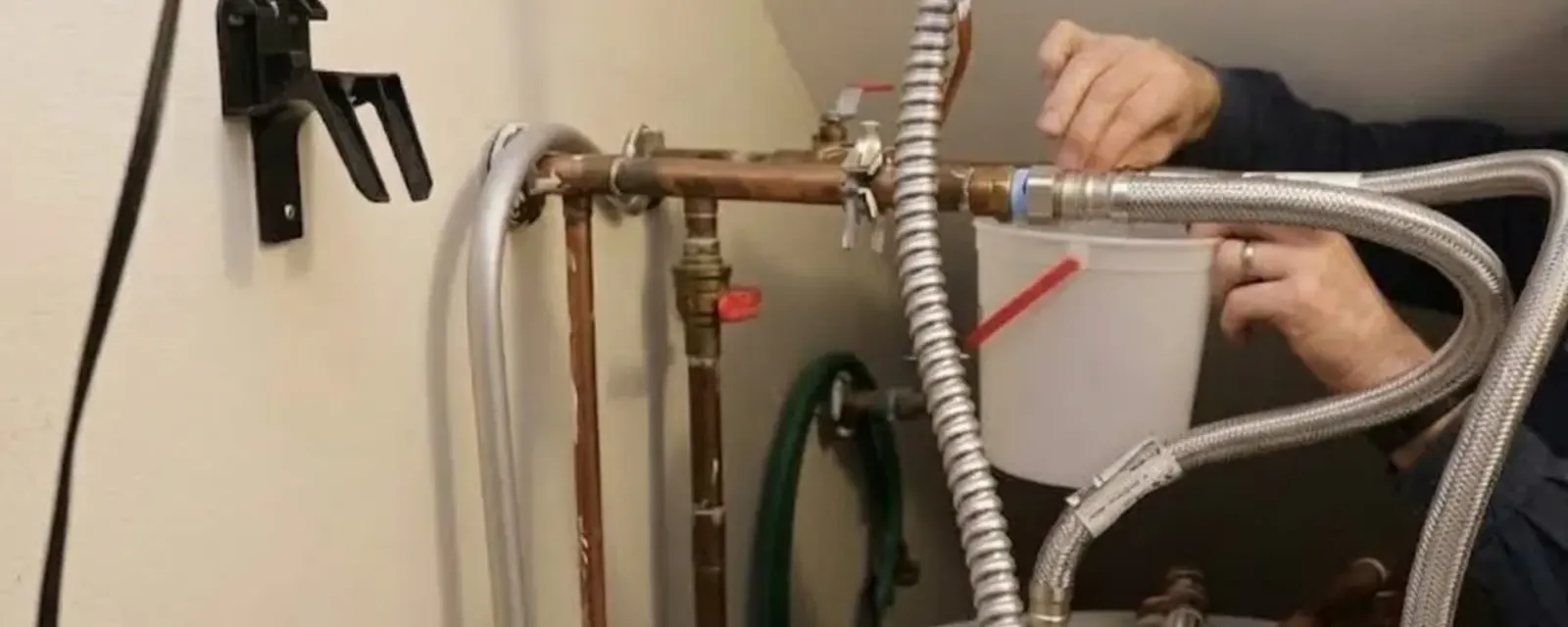
To replace a water heater expansion tank, shut off the water and power or gas, drain pressure from the lines, unscrew the old tank from its tee, and thread on a new one precharged to match your house pressure. The job takes about an hour for a handy owner. The step that people miss is setting the air precharge, because a wrong setting makes a new tank useless.
A failed tank shows up as a dripping relief valve, hammering pipes, or a tank that feels full of water. Here is how to confirm that and what to do next.
By the Morristown Express Plumbing team. Published October 30, 2026. Updated October 30, 2026.
What the tank does
Heating water makes it expand. In a closed system, the extra volume has nowhere to go, so pressure climbs. The expansion tank holds a pocket of air behind a rubber diaphragm and absorbs that extra volume, which spares your relief valve and fixtures.
When the diaphragm fails, the air side fills with water and the tank stops cushioning. Pressure then spikes with every heating cycle, which is hard on the heater and every fitting.
Signs the tank has failed
Check these before buying a replacement.
- The relief valve drips or discharges after hot water use
- Tapping the tank sounds dull and heavy all the way down instead of hollow at the top
- Pressing the air valve on the tank releases water instead of air
- Pipes knock when a faucet closes
- The tank is rusted or leaking at the seam or fitting
Symptoms, causes, and what to check
Match what you see to a likely cause before replacing parts.
| Symptom | Likely cause | First check |
|---|---|---|
| Relief valve drips after showers | Tank waterlogged or valve worn | Tap test and air valve check |
| Water hammer | Pressure spike or loose pipes | House pressure gauge |
| Water from air valve | Diaphragm failed | Replace the tank |
| Leak at tank seam | Corroded tank | Replace the tank |
| New tank, same problem | Wrong precharge | Match air to house pressure |
Replacement steps
Turn off power at the breaker or set the gas control to off, then close the cold water supply. Open a hot faucet to relieve pressure and drain a little water from the heater to remove stored pressure. Unscrew the old tank, and keep a bucket handy.
Check house pressure with a gauge screwed onto a hose bib or the heater drain. Set the new tank's air side to match using a tire gauge and pump, with the tank unconnected from water. Apply thread sealant, hand-tighten, then reopen the supply slowly and check for leaks.
Where DIY goes wrong
Skipping the precharge is the most common error. A new tank shipped at one pressure installed on a line with another will not protect anything. Support is the next problem, since a tank hung only by its threads can strain the fitting and leak. Heavy tanks need a bracket.
Call a licensed plumber if there is no tee to connect to, if the pipe is galvanized and corroded, or if water keeps weeping after tightening. Our team handles this during water heater installation and as part of water heater repair when a dripping relief valve points to a failed tank.
Choosing the right replacement tank
Expansion tanks come in different volumes, and the right size depends on the water heater capacity and the system. The label on your old tank often lists size and maximum pressure. A plumber can match it to your heater.
Buy from a supplier you trust, and check the tank has no dents. A damaged shell or a leaking air valve out of the box is not worth installing.
Safety steps people skip
Always cut power or gas before touching the heater, because a tank that drains partly can leave an element exposed and burn it out. Let hot water cool before opening fittings. Wear gloves and eye protection, and expect a splash of water from the old tank.
If anything near the heater smells of gas, stop, leave the building, and call the gas utility or 911 before any plumber.
After the new tank is in
Open a hot tap to purge air, then check the connection with a dry paper towel. Recheck after an hour and again the next day. Watch the relief valve over the next few heating cycles to confirm it stays dry.
Write the install date and precharge number on the tank with a marker. Next time, that note saves guesswork.
When the real problem is somewhere else
Sometimes a new tank does not fix the symptom. A failing pressure regulator, a stuck check valve, or loose pipe straps can cause the same knocking and drips. A plumber who tests house pressure with a gauge before and after the swap finds the real cause quickly.
If the pressure reads high at rest, the supply may need a regulator adjustment or replacement, which is a separate repair. Replacing the tank alone would only hide the fault.
Take a reading in the morning and again late at night. Pressure often changes through the day, and the high reading is the one your tank must handle.
Tools and parts to gather first
Collect an adjustable wrench, a tire pressure gauge, a small hand pump, thread sealant tape, a bucket, towels, and a pressure gauge for a hose bib. Pick up a new tank sized for your heater and, if the old fitting is corroded, a replacement tee or flexible connector.
Having everything on hand matters because the water is off while you work. A trip to the store with the house cold and dry is a good reason to hand the job to a plumber instead.
Cost drivers without the numbers
The price of this job depends on the tank itself, how easy the heater is to reach, and whether the fitting and tee are in good shape. A corroded connection or a missing shutoff adds work. Labor is usually modest compared with the damage a stuck relief valve can do, so a failing tank is rarely worth ignoring.
Morristown, NJ: pressure depends on your supplier
The Southeast Morris County Municipal Utilities Authority supplies water to Morristown, Morris Township, and Morris Plains, according to its 2024 water quality report. Each household still sees its own pressure depending on street, elevation, and any pressure regulator on the house. Measure yours with a gauge instead of trusting a number from a neighbor.
In Morris Plains the same utility applies, while Parsippany-Troy Hills runs its own township water department, described by the township as a groundwater-based system. If you are unsure which supplier you have, check your bill or ask your water utility.
Frequently asked questions
Not every one. Closed systems, such as those with a check valve or a pressure regulator, usually do. A plumber can check your setup, and the town construction office can confirm local requirements.
Match it to your house water pressure, measured with a gauge, with the tank disconnected from water. Use a tire gauge to check the air side.
Yes. Without the cushion, pressure rises when water heats, and the relief valve may open repeatedly.
Small tanks sometimes do, but larger ones need a support bracket. Ask for a support if the tank is heavy.
It varies with water conditions and pressure. A waterlogged diaphragm is the usual end, and a tap test catches it.
SMCMUA supplies Morris Plains. Pressure at your house comes from your street and plumbing, so measure it before setting the tank.