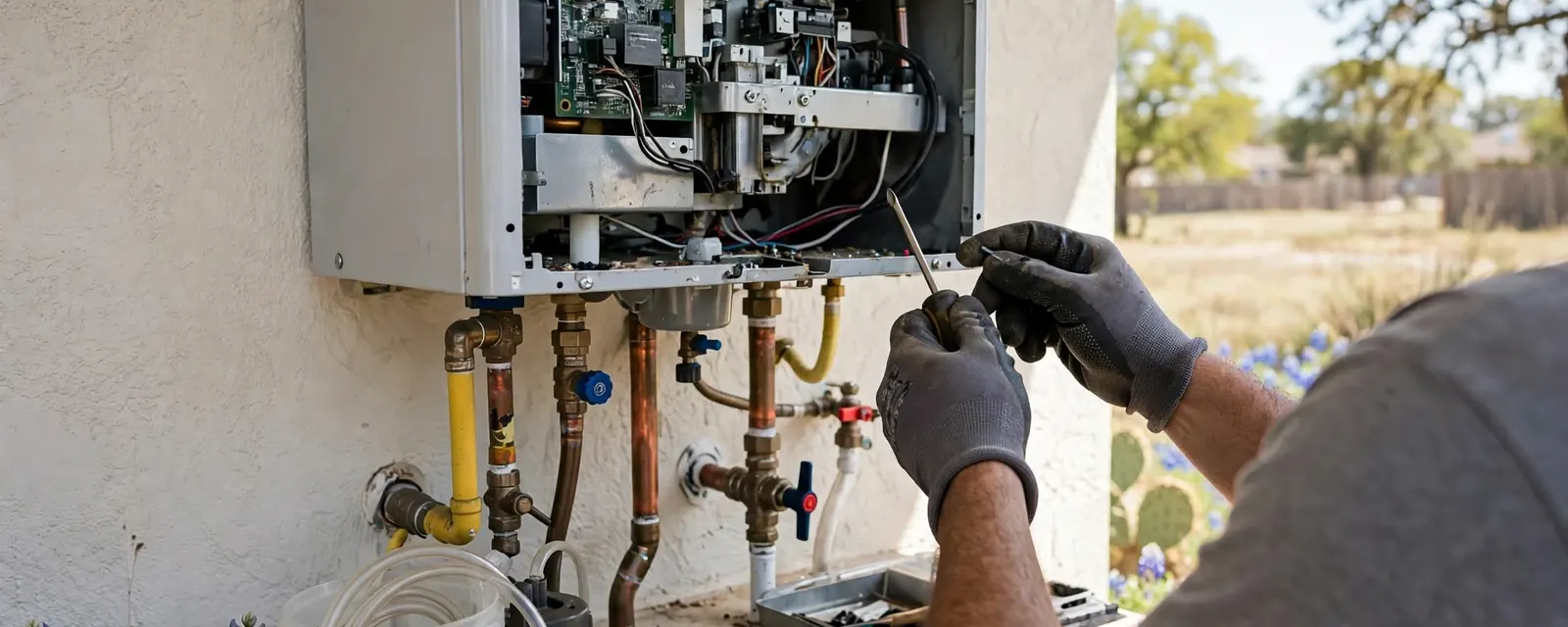
If your tankless water heater is leaking, turn off the power or gas to the unit, close the cold water shutoff valve, and put a pan or towels under the drip. Then find where the water comes from. A weeping fitting or a loose filter cap is a small fix, while water coming from inside the cabinet often means a cracked heat exchanger.
Do not keep running the unit to see what happens. Water meeting electronics or a gas burner is a safety risk. A licensed plumber can trace the leak, tell you whether repair makes sense, and offer a same-day appointment when available.
By the Morristown Express Plumbing team. Published October 30, 2026. Updated October 30, 2026.
Shut it down safely
Do these in order before anything else.
- Turn off the electric breaker, or switch the gas valve to off for a gas unit.
- Close the cold water isolation valve feeding the heater.
- Open a hot tap elsewhere to relieve pressure.
- Place a pan or towels under the leak and wipe nearby surfaces dry.
- Take a photo of the leak spot and any error code on the display.
- Smell gas? Leave the building and call the gas utility or 911 first.
Where the water is coming from
Leaks fall into a few common spots. The most frequent is a loose or worn union on the water connections at the bottom of the unit. The second is the isolation valves, especially if they were recently serviced. Others include the inline filter, the condensate drain on high-efficiency models, and the pressure relief valve.
Water pooling inside the cabinet or running down from the top suggests internal trouble. Check whether the water is clear and pure, which suggests plumbing, or slightly acidic and sour-smelling, which suggests condensate.
Where leaks start
Use this as a quick triage guide.
| Leak location | Likely cause | Next step |
|---|---|---|
| Bottom water connections | Loose union or worn gasket | Tighten or replace the fitting |
| Isolation valves | Worn washer or packing | Replace the valve |
| Inline filter | Loose cap, cracked housing | Reseat or replace the filter |
| Condensate drain | Blocked line, cracked trap | Clear or replace the drain |
| Inside the cabinet | Cracked heat exchanger | Call a plumber |
| Pressure relief valve | High pressure or failing valve | Call a plumber |
Is the water really from the heater
Before you blame the unit, dry every pipe and fitting around it and wait ten minutes. Condensation on cold supply lines can drip and look like a leak, especially in a humid basement during summer. A pipe above the heater, a dripping vent or a nearby washer hose can also put water on the floor.
Tape a dry paper towel under each connection. The one that gets wet first points to the source. If you cannot find it, treat the heater as the culprit until a plumber says otherwise.
Common causes in more detail
Scale is a major culprit. Mineral buildup narrows the heat exchanger, raises temperatures and eventually cracks a weld or tube. Corrosion from acidic condensate can also eat through a poorly drained line.
Freezing is another cause, especially for units on an outside wall or in an unheated garage. Ice expands inside the exchanger and splits it. A third cause is simple wear on rubber gaskets and O-rings, which harden and fail after years of heat cycling.
What you can fix, and what you should not
Tightening a union nut a quarter turn, replacing an inline filter screen or reseating a valve handle are reasonable tasks for a careful homeowner. If the leak stops and stays stopped, you can monitor it for a day.
Anything inside the cabinet is a different matter. A cracked heat exchanger cannot be patched, and opening a gas or electric appliance without training risks fire, shock and carbon monoxide. This is licensed tankless water heater work.
Repair or replace
A leaking fitting, valve or filter is usually a repair. A cracked heat exchanger is more serious, and replacement of that part may be close to the cost of a new unit on an older model. The deciding points are age, condition and whether the unit still sits in the right place.
If repair is not sensible, a plumber can discuss water heater replacement options, including another tankless unit or a tank. Ask for the price before any work begins.
Damage control while you wait
Move stored boxes and anything electrical off the floor. If water has reached the basement floor drain, let it drain rather than mopping it back into the room. Use a wet vacuum for standing water, and keep it away from the heater's wiring.
Check the ceiling below if the heater sits on an upper floor. A stain or sag means water is spreading, and a plumber needs to know that. Take photos for your insurance claim, since sudden leaks and gradual leaks are treated differently.
Ask your insurer early about coverage, and keep receipts for any cleanup supplies you buy. If the unit is under a manufacturer warranty, ask the plumber to document the failure.
What a service visit should include
A good technician checks the error history, inspects the connections and filter, tests water pressure, and looks for scale or corrosion on the heat exchanger. They should explain what failed and why before recommending a part.
Ask for the options in plain terms: repair, replace, or monitor. A professional will quote the job first, and will not push a new unit if the leak is a simple fitting.
Preventing the next leak
Flush the unit with a descaling solution once a year, or more often if your water is hard. Clean the inline filter every few months. Protect the unit from freezing, and keep the area around it clear.
If you hear banging, see error codes or notice temperature swings, have the unit looked at before a minor problem turns into a leak.
Morristown, NJ: scale and the water you actually have
According to SMCMUA's 2024 water quality report, hardness in its system ranged from 29 to 400 mg/L, or 1.7 to 23.4 grains per gallon, because the utility blends several sources. That spread means scale risk in a tankless unit really depends on which street you live on and what time of year it is.
Test your tap or read the report before choosing a flush schedule. We also help owners in Morris Township and Madison, where water suppliers and conditions differ, so ask your supplier about your own conditions.
Frequently asked questions
Treat it as urgent if water is flowing steadily, you smell gas, or the leak is near wiring. Shut off power or gas and water, then call a plumber. A slow drip at a fitting can wait for the next available visit.
No. Even a small leak can worsen under heat and pressure, and water near electronics is a hazard. Leave it off until it is checked.
Most often the water or gas connections at the bottom are loose or worn, or the condensate line is blocked. Dry the area and watch where drops form.
Signs include water inside the cabinet, error codes tied to the exchanger, rust-colored water and reduced heat. A plumber confirms with a pressure test.
Flushing reduces scale, which lowers the chance of exchanger damage, but it does not stop wear on seals. It is one part of good care.
It depends on your water, which varies across the SMCMUA system. Test your tap or read the report, then ask a plumber to set a schedule that matches.