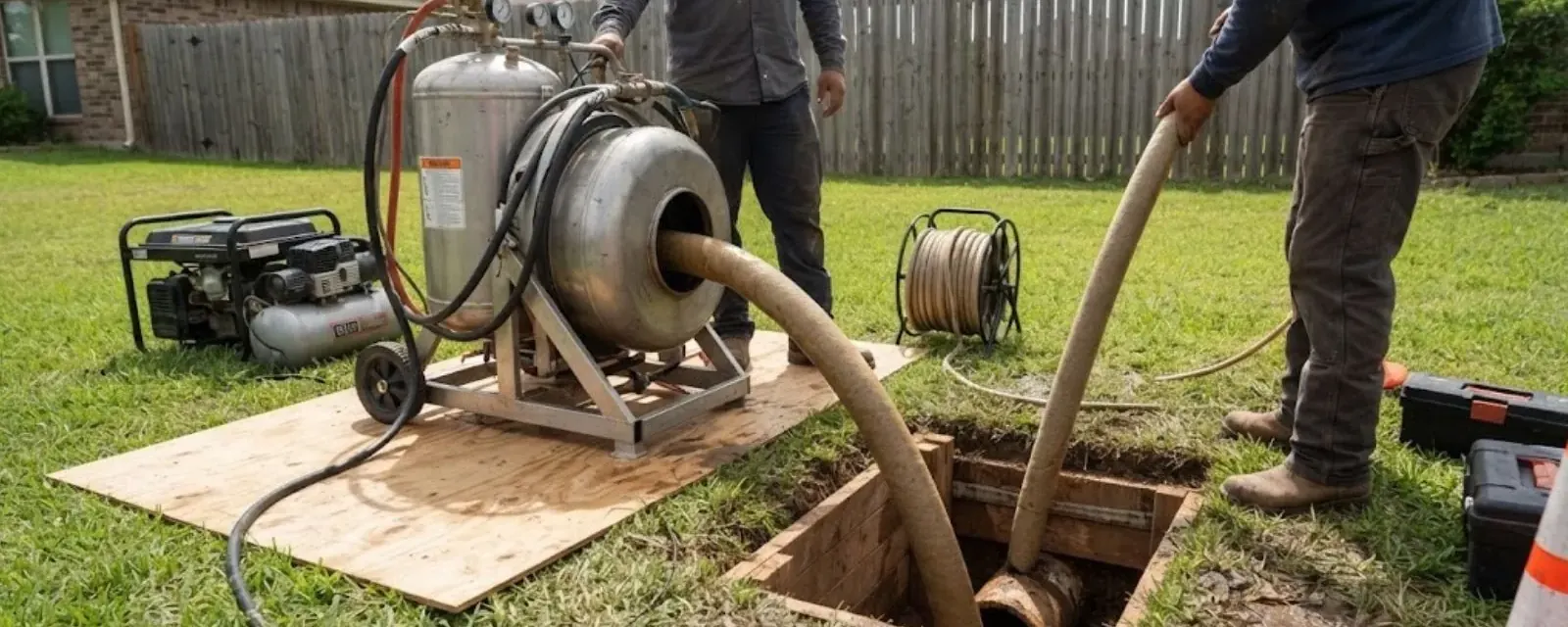
The cost of trenchless pipe lining depends on five things: how long the run is, the pipe diameter, how much cleaning and prep the pipe needs, how easy it is to reach both ends, and whether any section is too damaged to line. Crews price those factors together, which is why a quote over the phone without a camera look is only a rough idea.
We will not print numbers here, because a number without your pipe attached is misleading. What you can do is learn how a bid is built, so you can compare two quotes line by line. A licensed plumber should give you a clear price before work starts, with the scope written out.
By the Morristown Express Plumbing team. Published October 30, 2026. Updated October 30, 2026.
What trenchless lining actually is
Lining repairs an old pipe from the inside. A resin-soaked felt tube is pulled or inverted into the damaged pipe, inflated, and cured so it hardens into a new pipe within the old one. The result seals cracks, joints and root entry points without opening a long trench across the yard.
It suits pipes that are cracked, leaking at joints or invaded by roots, as long as the pipe still holds its basic shape. If the pipe has collapsed or a section has dropped, lining alone will not solve it.
The factors that move the price
Quotes rise or fall with these items.
- Length of pipe to be lined, from cleanout to connection
- Pipe diameter and material, which affect liner choice
- Amount of cleaning, jetting or root cutting needed first
- Access points, including whether a cleanout already exists
- Number of bends, offsets and lateral connections
- Spot repairs or excavation for sections that cannot be lined
- Reinstating side connections and the final camera report
Comparing two quotes fairly
Line these items up side by side before you decide.
| Item | What to check | Why it matters |
|---|---|---|
| Camera findings | Footage and written report | Confirms lining is possible |
| Pipe length and diameter | Same numbers on both bids | Drives material and labor |
| Prep work | Cleaning, root cutting, spot digs | Often the biggest variable |
| Liner material | Type and cure method | Affects durability |
| Side connections | Reinstated and cleared | Prevents new blockages |
| Final report | Post-lining camera pass | Proof the work is done |
Why a camera inspection comes first
Nobody can price a lining job honestly without seeing the pipe. A camera shows length, bends, damage and how many connections join the run. It also tells the crew whether lining is possible at all.
Ask for a copy of the footage and the findings. A sewer inspection is usually worth doing even if you decide not to line, because it gives you a baseline for the next decision.
How a quote is built, line by line
A good written quote separates the work into steps. It lists inspection, cleaning, any excavation, the liner itself, curing, reinstating side connections, and the final camera pass. When each step is its own line, you can see what you are paying for and compare it with another bid.
A vague quote that says only lining complete is harder to judge. Ask what the liner is made of, what is included if a hidden problem turns up, and what happens if the pipe cannot be lined after cleaning.
What happens on lining day
The crew first cleans the pipe with a cable or jet so the liner can bond to bare wall. Roots are cut back and any heavy scale is removed. A final camera pass confirms the pipe is ready.
The liner is then saturated with resin, pulled into place, and inflated against the old pipe. It cures with heat, steam or light, depending on the system. Once hard, a cutter reopens the side connections and the camera runs again to document the result.
During the cure, you will need to keep water use minimal. The crew will tell you when sinks, showers and toilets can go back into normal use.
Lining versus digging
Open-trench replacement removes the old pipe entirely, which is the better answer when the pipe has collapsed, lost its slope or is made of a material that cannot hold a liner. It also means cutting through landscaping, driveways or walks.
Lining usually disturbs far less ground, but it only works on pipes that can be prepared and re-formed. A plumber who offers both options and explains the trade-off is easier to trust than one who pushes a single answer. See how sewer line repair choices compare on your pipe.
Timing matters too. A pipe that is leaking into the soil should be fixed before the damage spreads under a driveway or foundation, so do not let a quote sit for months while the problem grows.
Why two honest bids can still differ
One contractor may include root cutting and a spot dig inside the price, while another leaves them as extras that appear later. One may line the full run, another only the damaged stretch. Neither is automatically wrong, but they are not the same job.
Watch for allowances. If a bid says additional work billed as needed, ask what that could include and how you will be told before it happens. A licensed plumber will put changes in writing and wait for your approval.
Where lining falls short
Lining is not a cure for a pipe that has lost its slope. If a section holds standing water, a liner will simply lock in the low spot. Likewise, a pipe that has been crushed or has a gap between sections may need a short excavation first.
Think of lining as a strong repair for a pipe with sound geometry and damaged walls. When the geometry is wrong, a different repair is the honest answer, even if it is more disruptive.
Questions to ask before you sign
Ask who handles permits, how long the liner is expected to last, what material it is, whether it blocks laterals, and how disruption to the yard and water use will be handled. Get the answers in writing.
Also ask what the camera report will say after lining. A clear before and after record helps if you sell the house later and a buyer asks about the sewer.
Morristown, NJ: tight lots and older pipe
Morristown covers about 3.01 square miles and is completely surrounded by Morris Township, according to Census figures reported by Wikipedia. Lots are compact in many parts of town, which is exactly where a trenchless method can save a front yard or driveway from being dug up.
Ask the town construction office whether a permit applies to your repair, since requirements vary and we do not guess at them. Our crews also work in Madison and Florham Park, and the same lining questions apply there.
Frequently asked questions
Because the pipe decides the price. Length, diameter, damage and access all change the work, and a camera shows them. Anyone quoting blind is guessing.
Many residential runs are done in a day or two once cleaning is finished, depending on length and cure method. Complex runs with spot repairs take longer.
No. Collapsed, badly offset or flattened pipe usually needs digging, and a section with standing water may need correcting first. A camera inspection decides which method fits your line.
Slightly, because the liner has thickness. In practice the smooth interior often flows as well as or better than rough old pipe.
Coverage varies by policy and cause. Sudden damage is treated differently from wear, so ask your insurer before work begins.
Rules depend on the work and the property, so ask the town construction office. A licensed plumber can tell you what documents they would need to file.