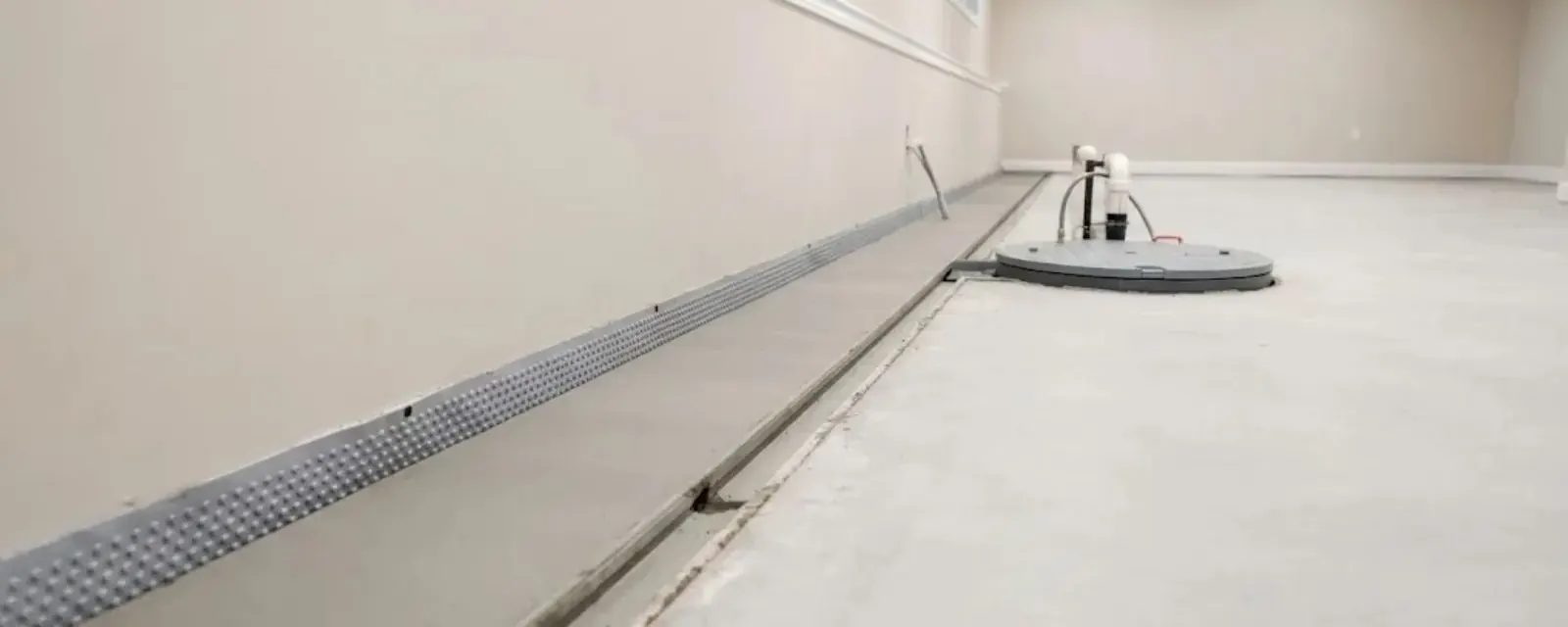
To waterproof a basement floor, first find out where the water comes from. Condensation, a cracked slab, and groundwater pushing up from below all look like a wet floor, but they need different fixes. Paint-on sealers only work on the first two. If water rises through the floor after rain, you need a way to drain it away, usually a perimeter drain feeding a sump pump.
Most homeowners in Morristown can run a simple test in one afternoon and know which problem they have. The rest of this guide covers that test, the repairs you can do yourself, and the point where a licensed plumber is the safer call.
By the Morristown Express Plumbing team. Published October 30, 2026. Updated October 30, 2026.
Find out where the water is coming from
Tape a square of aluminum foil tightly to the dry floor and seal all four edges. Leave it for a full day. If the underside of the foil is wet, moisture is rising through the concrete. If the top is wet, it is humid air condensing on a cool surface.
Next, watch the floor during and after a hard rain. Water that appears first along the wall-to-floor joint points to groundwater pressure. Water that bubbles up through a crack in the middle of the room means the same thing, just with a different path.
Match the symptom to the fix
Use the table below to decide how far to take the project.
Symptom, likely cause, and who should fix it
Match what you see to the most likely cause before spending anything.
| What you see | Likely cause | Typical fix |
|---|---|---|
| Damp floor, dry foil underside | Condensation from humid air | Dehumidifier, pipe insulation, air sealing |
| Dry hairline crack, no water | Normal concrete shrinkage | DIY epoxy or hydraulic cement |
| Water at the floor-wall joint after rain | Groundwater pressure | Perimeter drain and sump pump |
| Water bubbling through a crack | Rising groundwater | Drain system, pump, licensed plumber |
| Wet floor with no rain | Leaking pipe or failed fixture | Leak detection by a plumber |
What you can safely do yourself
Condensation is the easiest case. Run a dehumidifier, seal air leaks around windows, and keep the clothes dryer vented outdoors. Insulating cold water pipes stops them from dripping onto the slab.
Hairline cracks that stay dry can be filled with a hydraulic cement or an epoxy injection kit. Clean the crack, follow the product instructions, and let it cure fully before you put anything on the floor. A masonry sealer then helps with minor dampness, but only on a clean, bare surface.
Fix the outside first
A surprising amount of floor water starts in the yard. Gutters that dump beside the foundation, downspouts that end at the wall, and soil that slopes toward the house all load the ground with water. Extend downspouts several feet away and regrade so the soil falls away from the foundation.
If the floor stays dry after a few storms, you saved yourself a much bigger bill. If it does not, the groundwater is rising on its own and surface fixes will not hold.
Checklist before you buy any sealer
Work down this list in order and stop at the first item that fails.
- The foil test shows moisture on the top side only, not the underside
- The floor is bare concrete with no old paint, glue, or tile mastic
- Cracks are dry and narrower than a pencil line
- Downspouts discharge well away from the house
- No water appears at the wall joint after rain
- There is no musty smell or white mineral crust on the walls
When a drain and sump pump are the real answer
When water rises through the slab or wells up at the wall joint, a coating just traps pressure behind it until the coating peels. The lasting fix is to give the water somewhere to go. That means cutting a channel along the floor edge, laying perforated drain pipe in gravel, and routing it to a sump pit with a pump.
This is plumbing work, and it is where DIY most often goes wrong. Cutting into a slab can hit existing drain or supply lines, and an undersized pump fails during the storm you bought it for. Our licensed plumbers handle the drain and pump side through basement waterproofing visits and sump pump installs, and we will tell you plainly if the job needs an excavation contractor instead.
What floor coatings can and cannot do
Epoxy and masonry coatings seal the pores of concrete against surface moisture. They look clean and make the room more usable, which is why they sell well. They do not stop hydrostatic pressure, which is water pushing up from saturated soil with real force behind it.
When that pressure meets a coating, it finds the weakest edge. The result is bubbling, peeling, or white powder under the film, often within a season. Buyers who skipped the diagnosis step are the ones who end up scraping the floor and starting over.
Keeping the floor dry after the repair
Once water has somewhere to go, upkeep is simple. Pour a bucket of water into the sump pit twice a year and confirm the pump starts, runs, and shuts off. Clear the pit of silt, and listen for a pump that hums without moving water.
Keep furniture and stored boxes a few inches off the slab, and move anything valuable onto shelves. A floor drain that still has a water seal in its trap will also stop sewer odor from drifting up, so top it off when it dries out.
Questions to ask any contractor
Ask what is causing the water, not just what product they sell. A good answer names the entry point and explains why the fix suits it. Ask who handles the electrical for the pump, where the discharge pipe will empty, and what happens when the power fails.
Get the scope in writing, including the clear price before work starts. If a contractor will not explain the cause, or recommends the same product for every symptom, move on.
Morristown, NJ: why heavy rain matters for your floor
According to NJDEP figures reported by Patch, the Morristown area received between 5.54 and 6.49 inches of rain in 24 hours during the remnants of Hurricane Ida on September 1 and 2, 2021. Roads including Martin Luther King Avenue and Flagler Street closed for flooding. A basement that stayed dry in ordinary storms can still fail in an event like that, so check that your pump has a working float and a battery backup option before the next forecast.
The National Weather Service gauge on the Whippany River in Morristown also rose from 1.9 feet to 5.11 feet in a single day during the October 30, 2017 nor'easter, reported by Patch. Homes in Morris Township and Parsippany-Troy Hills sit along the same river system, so the same advice applies there.
Frequently asked questions
Only if the problem is surface dampness or condensation. Paint cannot hold back water pushing up from the ground, and it will blister and peel once pressure builds underneath.
Not every basement needs one. If groundwater collects along the floor edge or rises through cracks, a drain system leading to a sump pit is the usual way to remove it.
It depends on how much moisture the slab carries and how well the surface was prepared. On a floor with active water pressure, expect failure within a season or two.
Drains, pits, and pumps are plumbing work, so a licensed plumber is the right call for that part. Large exterior excavation is a separate trade, and we will say so if your job needs it.
Not necessarily. It does mean a pump failure costs far more here during a storm than in a dry year, so test the pump before heavy rain arrives and keep the pit clear.
That points to a plumbing leak or a failed fixture rather than groundwater. Shut off water to the area if you can and call a plumber to trace it.